Category Archives: Pediatric Dentistry

Pediatric Dentist Yelled at My Daughter

My daughter is very inquisitive. I told him this before her appointment. I also told him that if he’d take just a couple of minutes before the appointment and explain what the tools are and what he’s going to do, she’d be fine and quiet. Without that, she’s likely to interrupt, grab, and ask a million questions. Well, guess what? He didn’t listen to me. He seemed rushed, greeted her and went straight into her check-up. She kept reaching around and stopping him to ask questions. He’d tell her to be still which lasted for a bit, but then the questions and reaching would start again. Eventually, he just shouted at her to shut up so he can finish. I don’t know if it was a bad day or what, but now my daughter thinks of the dentist as the “mean man” and doesn’t want to go back. Is there a way to fix this?

Mad Mom

Dear Mad Mom,
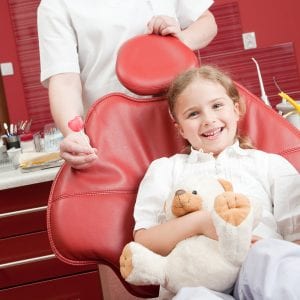
Child sitting in Pediatric Dentist chair

I don’t blame you for being upset. This is a disaster, but I think it can be salvaged. I don’t know if this is regular behavior for your pediatric dentist. It doesn’t sound like you do either. Because you were explaining your daughter’s personality to him it sounds like this may have been a new relationship. The first thing I’d do is check his online reviews. If he’s done this kind of thing before I’m sure someone would have mentioned it. I’d just look for another pediatric dentist in that case. Your daughter doesn’t need a “mean man” for her care.

If everyone seems to have had a positive experience with him, it’s likely something caused him to have an unbelievably bad day. I’m reminded of that scene in “It’s a Wonderful Life” where the pharmacist was cruel to the boy and it turned out he’d just found out his son had died. We never know what’s going on in a person’s life. If he’s a good man who made a mistake, he likely feels terrible about it. It would be a good opportunity to teach about forgiveness. Of course, he’d need to be willing to apologize to your little girl and tell her he’ll not do that again.

He’ll also need to be willing to follow your original advice and take her through all the cool tools. In fact, as part of the apology, maybe he can even take her on a little tour of the entire office.

A Good Pediatric Dentist Leaves a Postive Outlook in Children

At Peck Family Dentistry, Hillary Peck is fantastic with the children. Even though she’s not a pediatric specialist she loves working with the little ones and always brings them joy. IF it turns out this dentist is a dud, you can look for a general dentist who’s great with kids. Maybe even your dentist so you and your daughter can have a shared experience going to the dentist together.

This blog is brought to you by Dr. Kevin Peck.

Pediatric Dentist Insists on Fluoride Even When Insurance Won’t Cover It

I’m trying to decide if it’s worth it to get a fluoride treatment every dental visit with our pediatric dentist. They always pressure me too even though our insurance only covers it once a year. Is it really necessary if we use fluoride toothpaste?

Cathy M.

Dear Cathy,

Child sitting in  Pediatric Dentist chair

It’s expensive raising children and I know how important it is to save every dime you can. Though, sometimes spending a little bit of money saves you a lot. Your pediatric dentist is correct, getting a fluoride treatment every time is one way you’ll not only save money, you’ll save them unnecessary dental work in the future.

I’m glad you use a fluoride toothpaste. Every bit helps. But toothpaste doesn’t contain much. The fluoride your dentist provides is much stronger and is painted on so your child doesn’t ingest it. Fluoride is known to protect against decay and even reverse early decay. That simple procedure is one of the most useful things you can invest in. I would also be sure you get dental sealants as well on their molars.

The last thing you want is to save $30 on fluoride only to have to spend $200 on a filling. Or, if the cavity grows quickly, needing a pulpotomy (a child’s version of a root canal treatment).

Preventative dental care is one of the best things you can do for your child.

This blog is brought to you by Dr. Kevin Peck.

When Do You Leave a Pediatric Dentist?

Everyone’s saying my daughter needs to move away from a pediatric dentist. But, we have a good relationship with our pediatric dentist. He lets parents come back into the operatory which helps me feel safe about her being treated. I’m not sure I want to let my sixteen-year-old loose with an adult dentist who may or may not allow me back with her. When do we have to leave?

Sandra Q.

Dear Sandra,

Child with Pediatric Dentist

There isn’t a universal rule for when your child, son or daughter, should switch. Each pediatric dental office usually has their own policy. I’d talk to them and see what their policy is.

One thing I don’t want you worrying about is the safety of your daughter with dentists. I know there have been some stories in the news that would make any parent nervous, but those are very rare indeed. If you’re afraid, many general dentists will also let parents back into the operatory. When you’re calling around, simply ask them.

Are General Dentists Qualified to Treat Children?

If you’re looking for a sort of transitional period, there are general dentists who treat children. They’re perfectly qualified. All of them did a pediatric rotation during dental school. They just didn’t do the extra time to specialize in it. By the time they’re sixteen, you rarely have to worry about something coming up totally pediatric related that they’ll need to give you a specialist recommendation.

In fact, their jaws are developing more into an adult’s, so things like crowns and composite fillings may be better suited to an “adult” dentist. Teenagers also start getting interested in procedures such as teeth whitening, which most pediatric dentists don’t offer. Be aware, though, that their bite is still developing so don’t listen to a dentist who suggests that they’re ready for something like porcelain veneers.

This blog is brought to you by Dr. Kevin Peck.

My Sister Says I’m Ruining My Baby’s Teeth

I’m trying not to panic. Normally, I ignore my sister’s criticism because she tends to be really condescending to me. However, I don’t want to let my pride harm my child. She said that bottle feeding is damaging to my baby’s teeth and I need to get him to the dentist even while he’s an infant. She said breastfeeding children don’t need a dentist until they’re using baby or table food. Is she right?

Anne B.

Dear Anne,

Phoenix Pediatric Dentist and Breastfeeding

Welcome to the lifelong struggle of worrying you’re ruining your child. It will never end. Even when you’re doing everything right, you’ll be sure you’re wrong. And sometimes, you want to do the perfect thing, but can’t. That’s okay too. A friend of mine wanted to breastfeed her baby desperately because she knew it was the better food option. But, she developed cancer. The medicine’s she had to take precluded her from breastfeeding. It broke her heart. She cried every time she had to put a bottle in his mouth. Then a friend reminded her that formula wasn’t poison and as long as she’s doing the best she can, that’s all that matters.

Pediatric Dental Benefits of Breastfeeding

  • Innoculation Against Cavities: Though we’re not sure why, there are more and more studies showing that children who are mostly breastfed have some form of inoculation against cavities. It could be the properties in the breastmilk or possibly the anti-cavity minerals the mother passes to the child from her own immune system.
  • The Mechanics: The way the breast is designed and causes the milk to shoot to the back of the baby’s mouth, kicks in their sucking reflex. Bottle feeding just drops the formula in the baby’s mouth and it often pools around their teeth.

All that being said, that doesn’t mean breastfed babies don’t need to see a dentist. Genetics is a large factor in how healthy your teeth stay. So parents with a high number of cavities are likely to have children prone to cavities. Also, moms who breastfeed their babies to sleep don’t realize that milk will pool because the baby stops sucking but milk still shoots out for a moment after he falls asleep. Pooled milk (or formula) causes cavities.

Preventing Pediatric Dental Problems

Whether you breastfeed or bottle feed it’s important you go to a pediatric dentist. How you feed the baby has no effect on developmental abnormalities in tooth development. Baby’s teeth are developing while they’re still in the womb. If for some reason there is an abnormality, it’s much better to catch it early when something may be able to be done about it.

Also, the worst thing you can do is wait, assuming everything is fine, until there is a dental emergency. Then, your child’s first experience with the dentist will be a painful experience. That’s how they’ll view the dentist from now on.

It’s much better for them to get to know the dentist early, when everything is fine with their teeth. The dentist and staff will just show them the instruments, let them sit in the chair, examine their teeth, do a fun, gentle cleaning, and check that everything is normal and healthy. When that happens, they’ll love the dentist… or at least not fear him or her.

Also, don’t forget to brush, even when they just have a couple of teeth. Teach them good habits from the beginning so it becomes just that— a habit.

This blog is brought to you by Dr. Kevin Peck.

Is It Normal For Children to Freak Out About Cavities?

My son has always gone to the dentist just fine.  He’s even looked forward to the appointments. This last visit was a disaster. We found out he has a cavity. The dentist offered to fill it right then. That’s when everything fell apart. My son started screaming, went limp, slid out of the chair, and fled the room. Is this normal? I was mortified.

Sadie M.

Dear Sadie,

Pediatric Dentist

There could be a few things factoring into this.  First, it doesn’t sound like your dentist is skilled in working with children. Most children don’t do well when an unexpected medical treatment is suddenly thrust upon them.

He would have been better served if the dentist talked to him for a minute ahead of time to let him know what a cavity means and how easy it is to treat, in terms he could understand.

Talk to him about what he thought was going to happen. He may have heard a false horror story at school about what happens when you have a cavity at the dentist.

Maybe the dentist pulled out the needle for the anesthetic. That long puppy could scare a navy seal.  Dentists who work with children know ways of keeping that out of sight.

Sometimes children just can’t handle the idea of the needle anesthetic. Most pediatric dentists also offer sedation dentistry. This helps relax children. In fact, many of them completely sleep through the entire procedure.

I hope this helps.

This blog is brought to you by Dr. Kevin Peck.


Can You Help Me Understand a Pulpotomy?

My son’s dentist says he needs something called a pulpotomy. I tried to ask him questions about it, but he gets annoyed and feels like I’m questioning him. I know he’s the dentists, but this is my son. I don’t want to just have a procedure done on him without understanding it.

Laura L.

Dear Laura,

I hate to hear that your dentist has you afraid to ask questions. Yes, he’s the dentist, but part of his job is to make sure you understand why he’s recommending certain procedures and gives you all the options. Especially as a pediatric dentist, you’d think he’d understand that. There’s nothing more precious to you than your child. If he can’t understand that, you need another dentist. You’re not stuck having to go to a pediatric dentist if your options are limited. There are general dentists who are great with children. Whoever you go to, I’d love for you to be able to ask as many questions as necessary for you to feel at peace.

Now, onto your question. Think of a pulpotomy as a mini root canal treatment for baby teeth which are infected. It’s usually done on molars which need to last until your son is around twelve years old. Otherwise, if he loses a molar, his teeth will shift causing crowding with his adult teeth. If his molar is infected, it does need a pulpotomy.

The procedure is fairly simple and your son won’t think of it any worse than a normal dental appointment. The pulp is removed from the roots of the tooth. Then it’s daubed with a disinfectant such as formocresol. When that’s completed, the tooth will be sealed. Usually, they’re covered with a stainless steel crown.

If it turns out the tooth has to be removed, make sure the dentist puts a space maintainer in its place so the teeth don’t shift.

I hope this helps you. Feel free to ask as many questions as you need.

This blog is brought to you by Affordable Dentist Dr. Kevin Peck.

Bummed My Son’s White Filling Keeps Falling Out

I don’t know what to do. I’ve been going to a pediatric dentist for my son. I wanted a white filling for him. The dentist understood that and gave him one. Or, at least he tried. He’s given him three and all of them have fallen out. I don’t know what to do. I don’t think it’s the pediatric dentist. He’s a respected dentist. He knows what he’s doing. Can you help me know what’s going on? I don’t want to give him a mercury filled filling.

Christina – New Jersey

Christina,

I understand your feelings about mercury-free fillings. Many patients are opting for them. Some patients even insist on them. With children it’s tricky. The process is completely different than with ye old silver amalgam fillings. Composite fillings work almost like a glue. The surface is etched and then the composite is bonded to it. As you can imagine, even a tiny bit of moisture missed in during this bonding process will destroy the bond, which is why a lot of dentists prefer to use amalgam when they’re working on back teeth or helping wiggly children. However, that doesn’t mean it’s impossible.

Without an examination it’s impossible to tell what the actual culprit is. But, moisture is the likely bad guy. With adults, you can usually work around this and take steps to keep the tooth dry during the procedure. Doctors generally use a mixture of cotton rolls, air, and dental dams to isolate the area they’re working on. Kids, especially little ones, have the tendency to fight this kind of stuff. They’ll move around in the chair, push their tongue into the preparation, and they aren’t typically fond of dental dams. So, when you get to the point where a parent really wants the white filling and the child can’t cooperate enough to keep it dry, sedation during the procedure becomes the next solution.

Dental sedation is not like surgical sedation. He will be conscious, but completely relaxed and very sleepy. It will help him stay still and cooperative during the procedure and is perfectly safe.

If you want to, you can get a second opinion from another pediatric dentist to determine if moisture is the actual issue. Then make a decision from there.

This blog is brought to you by Dr. Kevin Peck.

What the Real Reason My Toddler Can’t Get a Dental Flipper?

My son lost a tooth prematurely. He’s only three and it’s a front tooth. I’ve been told children’s teeth shift if the spaces are left open. I asked my pediatric dentist to provide him with a dental flipper. Instead, the dentist started shouting. He said it was the most ridiculous thing he’d ever heard. No child can sit still for a flipper. I’m not only offended, I’m sure with sedation it could be done. Unless you give me a better reason, I’m going to a different dentist.

Marilyn H. – Michigan

Marilyn,

I’m sorry your dentist was rude. That’s not a great way to build trust with patients, especially when you’re talking about their child’s dental health. While I’m sure you could work with sedation, the pediatric dentist is right, a dental flipper is a bad idea. Here’s why.

1. A child’s mouth is constantly growing. The flipper won’t fit for long. You’d have to keep making a new one.
2. It’s a choking hazard. Flippers are removable appliances. Even if he didn’t pull at it, which is highly unlikely, it could just slip out and he’ll partially swallow it.

I have some great news for you, though. The only teeth where you have to worry about shifting are the back teeth. In those cases, we’d place a space maintainer to prevent the shifting. Also, your child’s age means he won’t be self-conscious about the tooth loss. In fact, he might be proud he’s the first among his friends to lose a baby teeth.

You didn’t mention how he lost his tooth. If it was due to trauma, it might be a good idea to have the adult tooth checked for damage. In the unlikely event the adult tooth is damaged, don’t panic. There are plenty of options for his adult tooth. Dentistry has developed tremendously. Even if he completely lost the adult tooth (and again, unlikely, so don’t panic), we now have dental implants that mimic having a natural tooth exactly, even down to the tooth root.

This blog is brought to you by Dr. Kevin Peck.

Must I Stop Seeing a Pediatric Dentist When I Turn 18?

I love my pediatric dentist. I’ve been seeing her since I was five years old. I love her. The office is great. The staff is nice. Everything is good there. She has seen me through a lot. We talk about everything. I also have some anxiety issues and she has always been good with me about it. The problem is, I’m turning 18 in a few months.  Are they going to kick me out of the office and make me see a regular dentist? If they let me stay, should I feel weird about it?

Jessi – Georgia

Dear Jessi,

Typically, they do see kids, but they also take care of adults who have special needs and those who can be better served by the fun and relaxed atmosphere only a pediatric dentist can provide. However, every pediatric dentist has his or her own guidelines, but many of them are glad to continue seeing people until they’re ready to move on, even after they are officially a legal adult.

At this stage, you probably still have another year of high school anyway, so it makes sense to keep with what you have going for the time being, especially because you’ve got such a good relationship with her.

The only real concern is if you need to have serious dental work done. If you wind up needing a root canal, crowns, periodontal care, or something along those lines, your dentist may not be able to do them. It wouldn’t be because she “can’t.” She has the same training and schooling as any other dentist, but with additional training in working with kids. However,  kids don’t often need those kinds of services, and so she might not be set up to perform them or she might perform them so infrequently that she’d refer you to someone else.

This may not even be a concern that you have to face, though, as long as your oral health remains good for your remaining years with her.

In all likelihood, they’ll be glad to see you for quite some time, but you may want to call ahead and see what their policy is just to be sure. No, you shouldn’t feel weird about it at all. You’ve found a great dentist that you’re comfortable with and it sounds like she treats you well. That’s worth hanging onto and she’d probably be glad to know how much she’s touched your life.

You may also tell her how you’re feeling. She may know who the perfect dentist will be for you when you’re ready.  It will be much easier to see a new dentist before there’s a serious issue than after.

This blog is brought to you by Dr. Kevin Peck.

How Many X-Rays Are Really Necessary?

Can you give me an unbiased perspective? Our pediatric dentist insists on x-rays every. single. visit. I think that’s a little excessive, both for the cost and the radiation. Is that really necessary?

Emily S. – Oregon

Emily,

Well, truthfully, the standard is x-rays once a year. Twice a year is not completely necessary, unless there is a special reason. For instance, if you have a family history of cavities or the dentist noticed something about your children’s teeth.

Talk to your dentist about it. If there’s nothing specific, then tell your pediatric dentist you prefer to only do the x-rays once a year.

Regarding the radiation, that’s perfectly safe. Most dentist use digital x-rays which have much less radiation than traditional x-rays.  Your children aren’t getting very much radiation.

This blog is brought to you by Dr. Kevin Peck.