Category Archives: Pediatric Dentistry

How to prepare for a child’s first dental appointment

We have scheduled our 5 year old son for his first dental visit. He is very shy and quite apprehensive to people he isn’t comfortable around. Are there are specific ways we can prepare him so he will not be afraid?

Thank you,
Brooke

Dear Brooke,
It can definitely be stressful to take your child to the dentist for his or her first time. However, there are many things you can do to make the experience a fun and teachable one. The biggest thing to remember is that if you are stressed or anxious, he will feel that. Try not to say things like, “Don’t be afraid,” “It’s not scary,” or “It won’t hurt,” when you discuss the dental appointment. Be sure to remember that any negative dental experiences you have had are your experiences and not necessarily indicative of the type of experience he will have. Talk about the appointment like it is a natural thing for him to do, but show excitement about it being his first appointment, like you would his first haircut. It is a great idea to let him come along with you to one of your appointments, so he can become familiar with the office, the staff, and the routine. If this is not an option, or you are using a new office, call ahead to to find out what you can expect, or visit the office’s website, in order to talk with him about it. Read books about going to the dentist, or watch cartoons. You could also role play at home, first with you playing the dentist role, then switch and let your son be the dentist. But, again, the most important component in this is to build-up the experience as a positive one.

It is also a good idea to try to schedule a morning appointment, so he can be well-rested and have had a good breakfast beforehand. Be sure to arrive to your appointment somewhat early, to allow your son a chance to become used to the office. If, by chance, your office does not allow parents to accompany children to the exam room, you should be aware beforehand to decrease his anxiety about this. However, if you are able to go back, snap a photo of her being a good patient and cooperating.

Many offices give children toothbrushes and other goodies such as balloons or tokens when they are finished. If the dental office does not provide these, it’s a great idea to have a toothbrush and small toy or reward to give him at the end of the appointment. You just want to be sure to reinforce the good behavior.

Also, please remember, if the visit is not as positive as you hoped for, and practiced for, don’t fret. Many children take time to become comfortable to new places and things. It will be good to have already been in the office and provided the experience. Then, try again after a few months. Good luck!

This post is sponsored by the office of Phoenix pediatric dentist, Dr. Hillary Peck.
Does my child’s baby tooth need a filling?

My daughter is seven years old. One of her baby teeth has a cavity and her pediatric dentist says it needs filled. I’m struggling with this prognosis. If the tooth is going to eventually fall out, does it really need filled? Or, is the dentist just wanting the money?

Thank you,
Ann

Dear Ann,

If the tooth with the cavity on it happens to be one of your daughter’s eight front teeth, there is no reason to have it filled. However, if the tooth in question is in the back, there are several reasons to fill it, as it could be a few years before the tooth falls out since some baby teeth stay in a child’s mouth until age 12 or more. In fact, there are some adults who still have baby teeth due to no permanent teeth growing in under them. An x-ray is the only way to know this or not. Needless to say, if the tooth with the cavity is a back tooth, she needs to have it filled in order to keep the tooth and hold the space for the adult teeth to come in correctly.  Letting things go and not filling the tooth will cause further decay to build up and she will eventually have to have the tooth extracted, which can be a traumatic experience for a child. If the tooth is pulled, a space maintainer will be needed, in order to keep the space for the adult tooth. If the tooth is removed or comes out too soon, and nothing is put in its place, the other teeth takeover the space and will prevent the eruption of the permanent tooth. This would cause a definite need for orthodontics in her future. Another point to consider, if the tooth in question is her last baby tooth, is is likely it is her six-year molar. This is a permanent tooth and would most definitely require a filling.

This post was written by the office of Phoenix pediatric dentist, Dr. Hillary Peck.

Should my child be seen for a painful loose tooth?

My elementary-aged son seems to be getting ready to lose his first tooth. He recently had his dental check-up with her pediatric dentist and we were told everything appeared good and normal. However, lately he has been complaining that it feels like one of his front two teeth is getting bigger. Then, he recently bit down on a carrot and immediately started to cry. There was blood and the tooth appeared to be out of place. I thought this might all be due to the tooth preparing to fall out, but am starting to second-guess myself. Is this normal? Should I have her seen?

Thank you,
Bethany

Dear Bethany,

Each tooth that is lost fights of small battle in the process which leads to it falling out. First, the permanent, adult tooth pushes the baby tooth up. This may be what is causing him to feel like his tooth is increasing in size. Next, the ligaments, which help the tooth stay in place, start to expand and strain, like small rubber bands. At times, they tighten back to their original state, white other times, they stay stretched and snap. It is quite possible the tooth was in fact loose and the ligaments were already stretched. Then, when he bit into the carrot, the bite forced the tooth out of alignment and caused some of the ligaments to snap. In this situation, popsicles are great, as well as avoiding hard foods. The tissue around the tooth was likely traumatized, but it’s unlikely any long-term issues or serious damage were caused to the adult tooth coming in. If your son is not in any pain now, and the area seems to be healing on its own, it’s not crucial that he be seen. However, if you are not certain, or will feel better doing so, seeing a pediatric dentist would be a good idea. In a rare situation, additional damage could be causes, which could require dental intervention. But, it sounds like stocking up on soft foods and popsicles is a good idea…and prepare for a visit from the Tooth Fairy!

This post is sponsored by the office of Phoenix pediatric dentist, Dr. Hillary Peck.

Should I see a pediatric dentist for my child’s loose tooth?

My elementary school-aged son has had loose front-teeth for a couple of months now. He complains that they hurt and give her trouble when he eats and applies pressure on them from his tongue. When I look at them, I can see them moving around and that they are very loose, so I can tell they are ready to come out. However, he will not let me near him in order to extract them myself, nor will he pull them out himself. I know a pediatric dentist could remedy the issue quickly and easily but am not sure this is something for which they see patients? I know they will pull teeth that need to be pulled, but will they remove a tooth that is basically hanging by a thread?

Thanks,
Dan

Dear Dan,

The ligaments which hold a tooth in place are just like a rubber band. They will stretch out but then tighten back up, causing the process of losing a baby tooth to be quite a process. It appears that your son could be experiencing this to some extent, which could be why it is taking the tooth longer to fall out on its own than you might be used to.

It’s generally a good idea to let baby teeth do their thing until they fall out naturally. Attempting to pull a baby tooth prematurely not only hurts the child but can cause unnecessary trauma to the area. The baby tooth also helps keep the space open for the adult tooth to come in.

If the tooth is bothering your child, seeing a pediatric dentist would not be a bad idea. He or she can assess the situation and ensure nothing out of the ordinary is happening or causing the delay. If the dentist determines that the baby tooth will not come out on its own, he or she may suggest extraction as a solution. But, if you think your son will oppose a dentist, as he does when you try to touch the tooth, it may be better to wait it out and let nature take its course.

This content is brought to you by office of Phoenix pediatric dentist, Dr. Hillary Peck.

Why are there white spots on my child’s teeth?

My son is a healthy, growing 14 month-old little boy. He is eating what he should be at this age and was breastfed for his first year. Recently, his front two teeth started to appear and have white spots on them. I haven’t seen this before and wondered if it is something I should have checked by a pediatric dentist, or mention it to my child’s pediatrician? I am not sure if this is something I should be concerned about, or if I should just let it be.

Thank you,
Abby

Dear Abby,

It is recommended by the American Dental Association that children visit a dentist for the first time after their first year of age and following the arrival of their first teeth. Typically, this is a quick visit to ensure that everything is developing as it should. It is not like that of an adult visit, which would normally include x-rays, a cleaning, and an exam. Most insurance companies cover this visit as a diagnostic visit and even have a  different billing code for it.

The spots you mention are somewhat concerning. Spots such as these are often times called decalcification spots, or signs of early decay.  They appear when minerals are removed from the tooth and it becomes exposed. Although this doesn’t mean she has a cavity, the exposure of the tooth can cause decay and lead to future cavities. It’s important that your child is seen by a pediatric dentist right away, as they may suggest fluoride treatments to strengthen the tooth and prevent future decay.

This decalcification is not typically seen in children this young and may be the cause of another issue. It’s important to take steps to care for your child’s teeth, but, at this point, it is too early to be seeing signs of decay. Therefore, it could be a problem with the development of your child’s teeth and you should work with your pediatric dentist, as well as your child’s doctor, to better determine the cause.

This post is sponsored by the office of Phoenix pediatric dentist, Dr. Hillary Peck.

Why won’t my daughter’s dentist use fluoride varnish?

Our previous pediatric dentist painted something on our daughter’s teeth, instead of using fluoride trays. We were thankful for this because it prevented the nasty taste that comes along with the trays.

Unfortunately, we had to change dental offices, for insurance reasons, and our new provider uses the trays. When I worriedly asked the hygienist, I was assured that this was a new foam version, with a better taste.

Well, my daughter hated it! She spat it out immediately and began crying hysterically.

When I asked about the painted version, used in our previous dental office, I was told it was “too new” and they don’t stock it. Was the painted version an experimental treatment used on my daughter? I am also now worried about how future dental visits will go.

Thank you,

Jen Smith

Dear Jen,

In regards to your question about the painted fluoride treatment, please rest assured that the varnish method is not experimental. It has been recommended by the American Academy of Dentists since 2006. It is the preferred method for children because it is easy to apply and tolerated much more positively by kids.

However, some dentists are resistant to change, even regarding something like fluoride varnish that has been successful for over a decade. The foam you are referring to is also safe, effective, and trusted, but the varnish is a more favorable option for children. It seems the choice to use the foam method is being made by personal preference, and your dentist should not have advised that it was “too new” or untrustworthy.

In regards to your question about your future dental visits being scared, please keep in mind that if you are fearful or nervous, your daughter will see this and feel the same. Dental trauma and anxiety can be difficult to overcome. If you are ever nervous or questioning a treatment that your child is receiving, try not to let this show on your face. If possible, ask to pause the treatment and speak to the provider in private, so as to not alarm your child. This will allow you to, hopefully, get your questions answered, and feel calm and confident going into the treatment, which will, in turn, help your child to feel the same and have a positive experience with her pediatric dentist.

This post is brought to you by the office of Phoenix pediatric dentist, Dr. Hillary Peck.

Why are silver fillings used with children?

I am a mom of three children under 10. Two of my three have had cavities in need of fillings. The pediatric dentist placed a silver filling for both children. I have also noticed that other children in our lives have silver fillings as well. As an adult, I know I would prefer a filling that matches the natural color of my teeth. I’m just wondering if there is some medical reason that the dentist uses the silver fillings on children?

Thank you,

Stacey

Dear Stacey,

Thank you for writing. There are several reasons pediatric dentists place silver fillings on children.

  1. Cost: Stainless steel or amalgam fillings cost less than the natural tooth-colored crowns, normally placed on adults. Because baby teeth are eventually replaced by permanent teeth, dentists typically use this option, because these fillings are premade in various shapes and can be placed less expensively.
  2. Decreases number of visits: Because most young children are feeling wiggly, dentists often use nitrous oxide or an anesthesia before a procedure. Therefore, limiting the number of visits is important. This is another advantage to using the premade fillings.
  3. Strength and effectiveness: When a significant portion of the tooth structure is damaged or lost, it needs the full coverage and strength that the stainless steel provides.
  4. The tooth is protected longer: the stainless steel helps to prevent sensitivity, future decay and the need for repairs.

Recommended: The American Academy of Pediatrics recommends the stainless steel crowns. Therefore, dentists who place these on children are following the recommendation.

This post is sponsored by the office of Phoenix pediatric dentist, Dr. Hillary Peck.

Pediatric Dentist Missed Long Coming Cavity

My son has a bit of trouble at the pediatric dentist’s office. We’ve only been twice, but both times they were unable to get x-rays on him. The exam and cleanings seem to go fine. The x-rays scare him. Both times, they’ve sent us on our way saying everything looked fine. Then, two days after our last appointment, he came to my room crying with a toothache and massive fever. I gave him some pain reliever and called the pediatric dentist. They weren’t open, so I called my dentist who agreed to see him. Thankfully, because he turned out to have a massive tooth infection on his back molar. My dentist was able to give him an x-ray without any problem. The decay was so bad he couldn’t save the tooth, which worries me because it was a molar. He gave him some dental sedation and extracted the molar right there. He said that cavity was a long time coming. How did the pediatric dentist miss it?

Lucy

Dear Lucy,

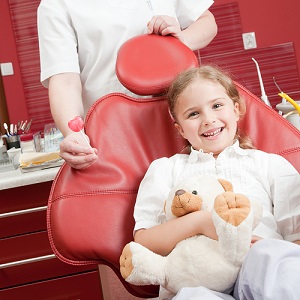
A child holding a teddy bear at the pediatric dentists office

It’s hard to say why the pediatric dentist missed it. I’m curious as to what your dentist did differently than your pediatric dentist which helped your son feel comfortable with the x-rays. It sounds like your family dentist is good with children. If you’re not satisfied with your current pediatric dentist you may consider you and your son going to the same practice. It’s perfectly fine for general dentists to treat children if they’re good with them.

I’m glad your dentist was able to deal with the infection so quickly. That could have turned out horribly if it spread further. You’re right it’s a shame that the molar couldn’t be saved. Hopefully, your dentist placed a space maintainer there for him. Otherwise, your son’s teeth will shift and cause crowding in his teeth. That will mean expensive orthodontics. You definitely don’t want to deal with that.

Effective Pediatric Dental Care

You’re wise to take your son to the dentist regularly. Too many parents wait until there’s a dental emergency to bring their children to the dentist. That makes their first experience a negative one, which often leads to dental anxiety.

It sounds like he responded well to dental sedation for the extraction. That’s good news too. The goal in pediatric care, along with good oral health, is to feel positive about the dentist.

Hopefully, this infection hasn’t completely thrown him off and he can enjoy going again.

This blog is brought to you by Phoenix Dentists Drs. Kevin and Hillary Peck.

Can a Pediatric Dentist Whiten My Son’s Tooth?

I don’t know what is going on with my son’s teeth. His top two teeth are turning dark. The rest of them are okay. Can a pediatric dentist whiten them?

Laura

Dear Laura,

A child holding a teddy bear at the pediatric dentists office

If just his front teeth are turning dark and not the others, it’s not a staining issue. Is it possible your son has suffered some trauma to those teeth recently? Could he have been hit in the mouth with something?

When a tooth is turning dark it means the tooth is either dead or dying. He’ll need a root canal treatment. You didn’t mention how old he is so depending on his age a pulpotomy might be more appropriate. It’s like a root canal for children.

You’ll need to see your pediatric dentist and have his tooth evaluated. It’s important to figure out if there’s any other damage. If he still has adult teeth underneath you’ll need to make sure they aren’t damaged as well.

Teeth Whitening and Pediatrics

Professional teeth whitening only works on natural tooth structure that has been stained. It doesn’t work on dead teeth. It also won’t work on any dental work that’s been done, such as fillings or crowns.

Most children don’t need any whitening because regular brushing keeps their teeth white. It’s us old folks who’ve accumulated years of stains on their teeth from things like coffee or tea, cigarettes, staining foods, etc.

There are some medicines which can stain teeth. Tetracycline is the worst of these. In those cases, then some cosmetic work may be warranted.

I’m assuming you’re son is under the regular care of a pediatric or family dentist. Please don’t put off getting this looked at. The last thing you want is for this to turn into a dental emergency. Not only are they dangerous and can turn life-threatening, but it’s important children have positive dental experiences. We want pleasant instead of painful memories of their dental care.

This blog is brought to you by Drs. Kevin and Hillary Peck.

Pediatric Sealants Aren’t Working

I don’t know what’s going on. My dentist insists my son’s sealants are on, but I don’t think they’re working. My son’s teeth look horrible. Will the sealants keep whitening from working? His teeth look so brown to me. He brushes. I’ve even started watching him to check, which really annoys him.

Kathy

Dear Kathy,

Four children one behind another smiling

I wanted to go over dental sealants with you because there seems to be a miscommunication somewhere either between you and your pediatric dentist, or possibly I’m not understanding what you’ve written. Sealants are meant to go on children’s back molars. Those have deep grooves in them which are nearly impossible for them to get clean. Because of that, we’ll place sealants on them which keep things from getting down in there. They don’t cover their front teeth in any way.

The makeup of baby and adult teeth are slightly different. With baby teeth, the enamel over the dentin is not translucent which makes their teeth look brighter and whiter. Adult teeth are very translucent which can show more of the dentin underneath. That has a yellowish color. If your comparing the color of his adult teeth to his baby teeth, the newer teeth will look less attractive in comparison.

When Children’s Teeth Look Dark

Children’s bodies and dental health are as varied as their personalities. It sounds like you’ve been monitoring his brushing and he’s doing that fine. Have you noticed if he intakes and staining beverages or foods? While most children don’t drink coffee, I’m often surprised how many of them drink iced tea. That can make someone’s smile brown looking quickly.

There are also certain spices which stain your teeth as well. If you’ve checked all these obvious culprits, the next thing to do is look into medication he may be (or have) taken. For instance, certain vitamins and antibiotics stain teeth. Tetracycline stains are some of the worst teeth stains to deal with. Not even teeth whitening makes much headway with them.

Another possibility is that your son has thin enamel, which will reveal more of the dentin. There are steps that can be taken to help that. Have a good talk with your pediatric dentist to get to the bottom of his coloring. If he or she doesn’t know what to do, try a cosmetic dentist that enjoys treating children.

This blog is brought to you by Drs. Kevin and Hillary Peck.